
Running a business today means handling multiple operations simultaneously like sales, finance, inventory, customer relationships, marketing, and more. When these functions are managed through different tools or disconnected systems, it often results in scattered data, limited visibility, and inefficiencies across teams. This is where Zoho ERP for your business becomes an essential solution. By bringing critical business processes together into one unified ecosystem, Zoho ERP helps organizations streamline operations and improve collaboration. It also enables businesses to maintain a clear and comprehensive view of their overall performance.
Instead of switching between multiple platforms to manage everyday tasks, businesses can rely on a centralized system that connects departments and information seamlessly. With Zoho ERP for your business, data flows smoothly between sales, finance, operations, and customer management, allowing teams to work with accurate and real-time information. This not only reduces manual effort but also improves decision-making and operational efficiency.
As businesses grow, the need for better coordination between departments becomes even more important. In this article we will explore why a unified system like Zoho ERP is essential and how it helps organizations simplify complex processes, automate tasks and reminders and build a more connected and scalable business environment.
ERP stands for Enterprise Resource Planning, a system designed to connect and manage multiple business functions within a single, centralized platform. Instead of operating different processes through separate tools, an ERP system integrates them so that information flows smoothly across departments. This is exactly what Zoho ERP for your business aims to achieve. Bringing together essential operations into one connected ecosystem.
Unlike traditional ERP systems that operate as a single rigid application, Zoho ERP for your business works as an integrated platform that functions seamlessly together. This ecosystem covers all the key areas required to run and manage business operations efficiently, including:
By integrating these functions into one environment, Zoho ERP helps eliminate fragmented systems and disconnected workflows. Teams across departments can access accurate information from a centralized system without constantly switching between different software tools.
When implemented effectively, Zoho ERP provides your business with complete operational visibility, improves collaboration between teams, and simplifies everyday business processes. This unified approach allows organizations to operate more efficiently while making better, data-driven decisions that support long-term growth
As businesses expand, their operations naturally become more complex. What once worked through spreadsheets, manual processes, or separate software tools can quickly turn into a challenge when the volume of data, customers, and transactions increases. Managing different departments through disconnected systems often leads to delays, errors, and a lack of clear visibility into overall business performance.
Many growing organizations face operational difficulties because their data and processes are scattered across multiple platforms. Sales teams may work in one system, finance in another, and inventory in a completely separate tool. Without a centralized platform, teams struggle to access accurate information and collaborate efficiently.
Some of the most common challenges businesses experience without a unified ERP system include:
Implementing Zoho ERP for your business helps eliminate these challenges by bringing all critical operations into one integrated system. With connected workflows and centralized data, businesses gain better control, improved efficiency, and the ability to make smarter, data-driven decisions that support sustainable growth.
One of the strongest advantages of implementing Zoho ERP for your business is the flexibility it offers in building an ecosystem that fits your operational needs. Unlike many traditional ERP systems, it does not follow a rigid structure. Instead, Zoho ERP allows businesses to combine multiple applications into one unified framework. This connected environment supports different departments and workflows more efficiently.
By integrating essential business functions into one connected environment, organizations can streamline operations, reduce manual work, and improve collaboration across teams. Sales, finance, operations, and management can all access the same data in real time, enabling better coordination and faster decision-making.
The modular nature of Zoho ERP allows businesses to start with the applications they need most and expand the system as their operations grow. Companies can gradually add modules based on their evolving requirements. Together, these applications create a connected ERP ecosystem that supports efficient and scalable business management.
Managing client and vendor information is one of the core capabilities of Zoho ERP. Within the ERP ecosystem, businesses can maintain a centralised database of their customers and suppliers, keeping all essential details organized in one place. From contact information to associated deals, sales records, and vendor transactions, everything can be easily accessed and managed through a unified platform.
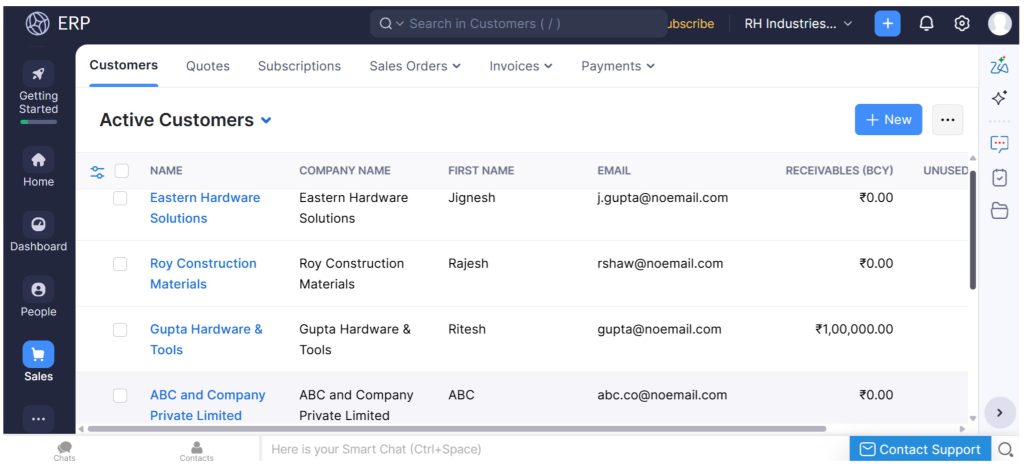
This structured approach helps businesses maintain clear visibility over their relationships with both clients and vendors, ensuring smoother collaboration, better coordination, and efficient management of business interactions.
Financial management becomes more structured when accounting operations are organized within Zoho ERP for your business. It enables businesses to establish a well-defined financial framework by creating and maintaining chart of accounts, recording journal entries, and managing core accounting records in a centralized system.
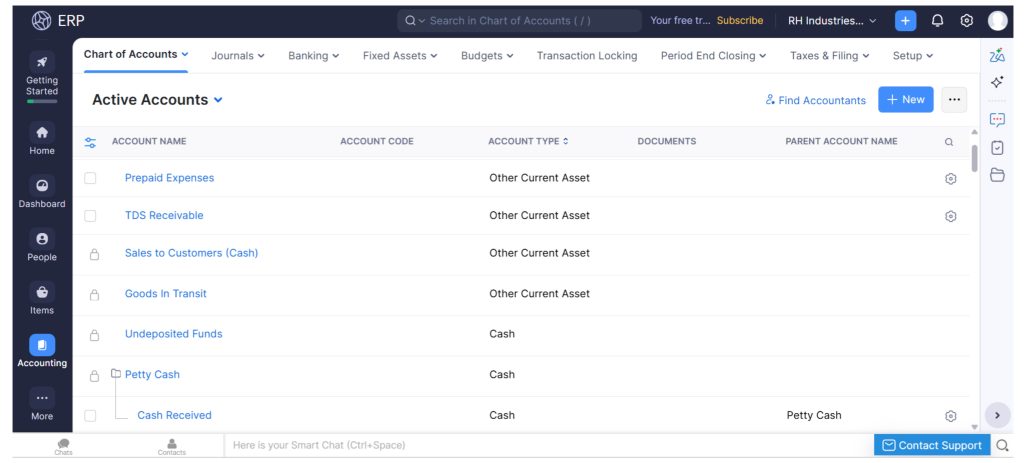
Finance teams can maintain accurate financial books while ensuring that all accounting activities are properly categorized and documented. With a unified accounting environment, organizations can maintain consistency in their financial records, improve accuracy in bookkeeping, and ensure that financial data remains organized and accessible for reporting, auditing, and compliance purposes.
For businesses that deal with products or physical goods, inventory control is a critical operational function. Zoho ERP helps organizations maintain accurate inventory records and manage product movement efficiently.
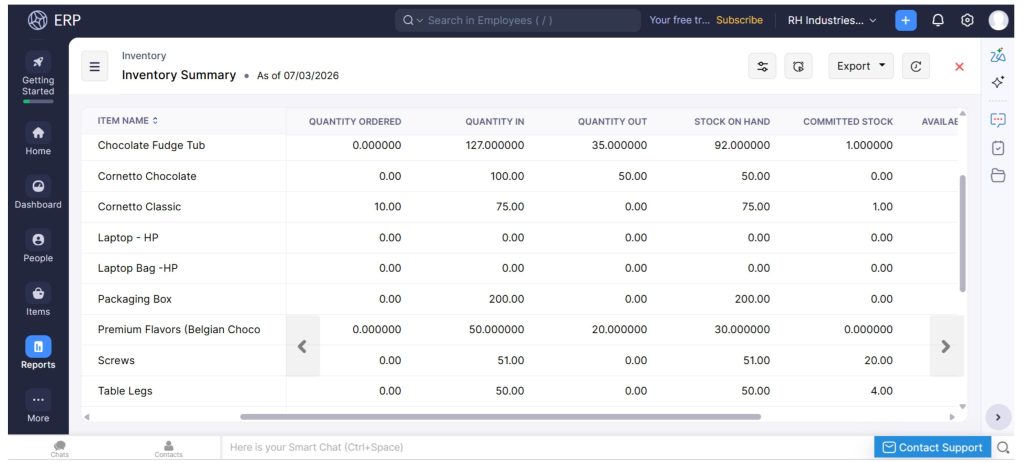
Businesses can track stock levels, manage multiple warehouses, monitor product availability, and streamline order fulfillment processes. By having real-time visibility into inventory data, companies can avoid common issues such as stock shortages or excess inventory. This level of control ensures smoother supply chain operations and helps businesses deliver products to customers on time while maintaining efficient stock management.
Reports and dashboards in Zoho ERP provide businesses with a clear and consolidated view of their operations. The platform allows users to easily create customized reports and interactive dashboards that bring together data from different business functions into a single, organized view.
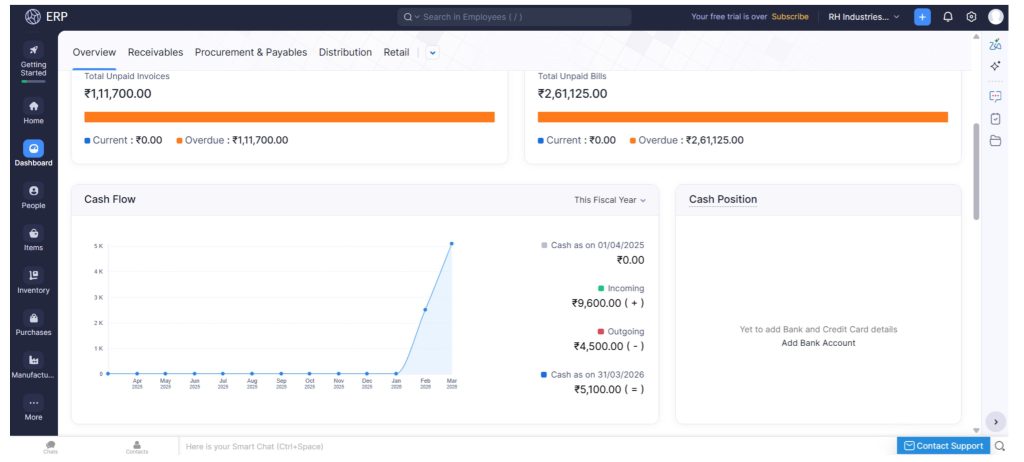
With flexible report-building capabilities, teams can generate detailed reports using specific modules, filters, and timeframes. This helps them quickly analyze important business information. Dashboards present the data visually through charts, graphs, and key metrics, making it easier to monitor activities and track important indicators at a glance.
By centralizing data and presenting it in a structured and visual format, Zoho ERP enables organizations to stay informed about their business performance and maintain better visibility across their operations.
Every business operates with its own processes, workflows, and operational requirements. A system that works for one organization may not necessarily suit another. This is why flexibility and adaptability are essential when implementing an ERP solution. One of the key strengths of Zoho ERP for your business is its ability to be customized according to specific industry needs, organizational structures, and operational workflows.
Instead of forcing businesses to adjust their processes to fit a rigid software structure, Zoho ERP allows organizations to configure the system in a way that aligns with how they already operate. This ensures that teams can work more efficiently while maintaining processes that are familiar and effective. By tailoring the system to match business requirements, companies can streamline operations, automate repetitive tasks, and improve overall productivity.
Businesses can customize several aspects of Zoho ERP for your business, including:
As businesses grow, their operational needs naturally evolve, and systems that once worked well may struggle to support increased complexity. Zoho ERP for your business is designed with scalability in mind, allowing organizations to expand their system as their business grows. Integrations can be added seamlessly without disrupting existing workflows. This flexibility ensures that businesses can continue using the same connected ecosystem while entering new markets, expanding teams, or introducing additional services.
Implementing Zoho ERP for your business offers several advantages that directly improve operational efficiency and support long-term growth. By connecting different business functions within a unified system, organizations can streamline processes, reduce manual work, and gain better visibility into their operations. This integrated approach enables teams to collaborate more effectively while ensuring that critical business information remains accurate and accessible.
Some of the key benefits of adopting Zoho ERP for your business include:
With these advantages, Zoho ERP for your business becomes more than just a technology solution, It forms the backbone of efficient and connected business management.
Managing a growing business requires more than just individual tools for different departments. It requires a connected system that provides visibility, coordination, and efficiency across the entire organization. When teams work on disconnected platforms, data becomes scattered, collaboration becomes difficult, and decision-making slows down.
This is where Zoho ERP for your business plays a crucial role. By bringing together essential functions such as sales, finance, inventory, and analytics, Zoho ERP creates a unified business ecosystem. This helps organizations streamline their operations and maintain better control over their processes. With everything connected on one platform, teams can work more efficiently while leadership gains real-time visibility into business performance.
As your business continues to grow and evolve, a scalable, integrated system is essential for long-term success. Zoho ERP provides that foundation by enabling organizations to simplify their processes, improve productivity, and adapt confidently to future opportunities.
Looking to implement Zoho ERP for your business? Get in touch with our Zoho experts today and discover how we can help you transform your business operations.