

A CRM for real estate developers is no longer optional. It has become essential for managing growth without confusion or operational gaps. As projects scale, complexity increases across departments. Sales, finance, legal, and marketing must move in sync. Without a structured system, even successful launches can create internal pressure.
Picture this. A new project launches and receives an overwhelming response. Leads pour in from digital campaigns, property portals, and broker networks. Site visits are scheduled back-to-back. Units start getting blocked within days. The sales team feels energized. Management sees strong momentum.
However, beneath the excitement, cracks slowly begin to appear. Inventory updates lag behind real-time discussions. Finance tracks milestone payments manually. Legal teams wait for booking forms and agreements. Brokers ask for commission clarity. Spreadsheets multiply across teams. Follow-ups are missed. Reporting becomes inconsistent.
What began as growth now feels chaotic. This is the turning point where developers recognize the need for structure. A well-designed CRM built on platforms like Zoho CRM becomes more than a sales tool. It becomes the operational backbone that connects inventory, payments, documentation, and deal journeys under one unified system.
Let us explore eight such capabilities every modern developer crm must have to scale with confidence.
Real estate development operates in clearly defined layers. Projects contain multiple buildings or towers. Each building contains several individual units. A CRM for real estate developers must reflect this hierarchy exactly as it exists on the ground. When this structure is missing, operational gaps begin to appear. Reporting becomes inconsistent across teams. Inventory visibility weakens. Sales teams struggle to provide accurate information to prospects. Even small data errors can create major financial or reputational risks.
A properly structured CRM creates alignment between planning, sales, and execution. It ensures that every project is organized from the top level down to the smallest unit detail. This foundation becomes critical as inventory volume grows.
At the project level, the CRM should provide a comprehensive overview of performance and progress. Leadership teams require macro-level clarity before making strategic decisions.
The system should track:
This centralized visibility allows management to monitor performance in real time. It also helps compare multiple projects under one dashboard. Decisions around marketing budgets, pricing adjustments, or sales focus become data-driven rather than assumption-based. When a CRM for real estate developers offers structured project tracking, executives gain confidence in their reporting accuracy.
Within each project, buildings or towers should be clearly mapped. This segmentation enables floor-wise analysis and tower-wise sales performance comparisons.
For example, one tower may sell faster due to layout preferences or view advantages. A structured CRM highlights these insights immediately. This allows developers to adjust pricing strategies or promotional campaigns accordingly.
The real power of the system lies at the unit level. Every unit should function as an individual record with complete intelligence attached to it.
Each unit must capture:
Availability status should update dynamically as units move from available to blocked, booked, or sold. This reduces manual dependency and prevents double commitments. When unit-level data remains accurate, sales teams can negotiate confidently. Finance teams can project revenue precisely. Management can forecast performance with clarity.
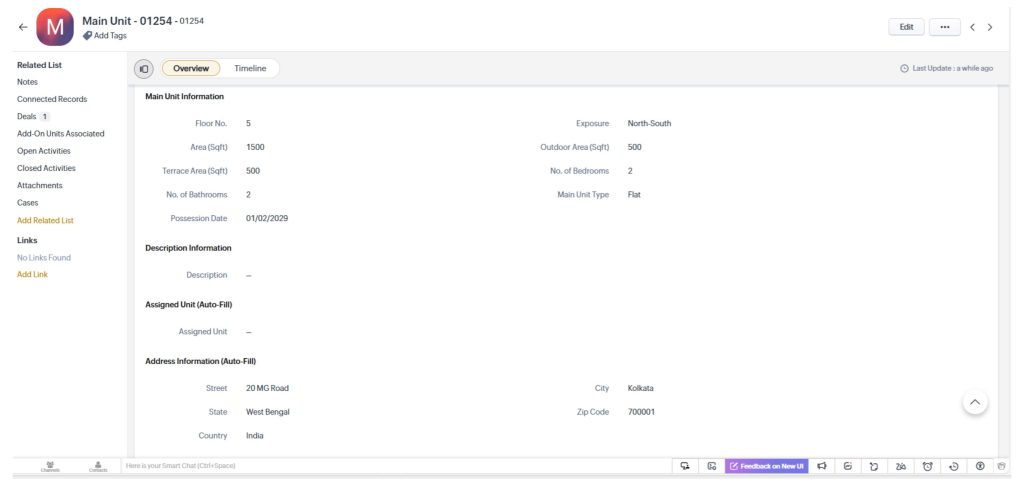
A well-structured CRM for developers transforms scattered data into a synchronized ecosystem. It reduces confusion, strengthens accountability, and builds a solid operational backbone for long-term growth.
A Real Estate Developer CRM must go beyond numeric inventory tracking. Developers do not sell abstract numbers. They sell positions, views, layouts, and floors. A stacking plan brings this clarity into the system. It connects architectural design with live availability data. This visual integration helps teams move from reactive selling to strategic selling.
When stacking plans are disconnected from the CRM, teams rely on static sheets. Updates are delayed. Miscommunication increases. A connected system ensures that every availability change reflects instantly across departments.
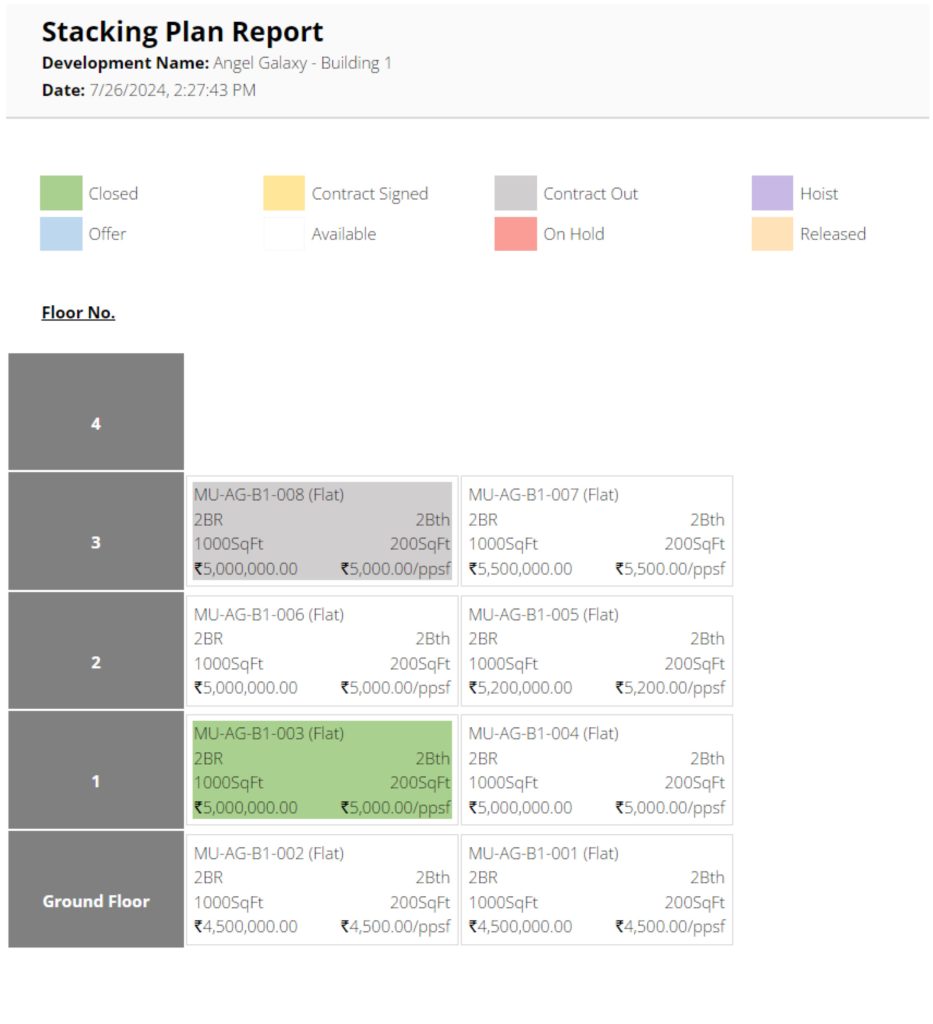
A properly integrated stacking plan should allow:
Sales representatives benefit immediately. They can respond confidently during live discussions. Premium units become easier to identify and promote. Buyers gain clarity, which increases trust. Inventory visibility directly influences negotiation strength. When teams have structured visual access inside the CRM for real estate developers, conversion speed improves naturally. Transparency builds credibility. Credibility accelerates decisions.
Payment structures in development are structured and layered. Most projects follow construction-linked, time-based, or hybrid payment plans. Managing these manually increases financial risk. A CRM for real estate developers must align payment schedules directly with each deal record.
Financial discipline is critical for sustainable growth. When milestone tracking is automated, revenue forecasting becomes reliable. Sales and finance teams remain aligned throughout the project lifecycle.
An effective system should:
This structured tracking reduces dependency on manual follow-ups. Finance teams gain immediate clarity on receivables. Sales teams stay informed during negotiations. Cash flow predictability strengthens operational stability. When milestone payments are managed inside the CRM, decision-making improves across departments. Financial visibility becomes proactive rather than reactive.
Real estate developers operate in high-volume environments. Leads arrive from digital ads, property portals, events, and broker networks. Without a centralized system, inquiries can easily be missed. A CRM for real estate developers ensures that every lead enters a structured pipeline.
Centralization alone is not enough. Understanding buyer intent is what improves conversions. A system must capture more than just contact information. It should build a buyer profile that guides sales conversations.
The CRM should record:
Automation tools available in Zoho CRM enable quick lead assignment and structured follow-ups. Reminders are automated. Escalations are controlled. When buyer requirements are documented properly, matching inventory becomes easier. Sales teams focus on qualified prospects. Marketing teams analyze source performance accurately. A structured lead management process strengthens the entire sales engine.
Every project follows a defined deal journey. It includes approvals, documentation, financial checkpoints, and legal coordination. Without structured control, deals may stall or skip critical steps. A CRM for real estate developers must enforce stage-wise discipline through automation.
Blueprint-driven workflows create accountability across departments. They ensure that no transition occurs without required documentation or approval. This reduces operational dependency on memory or manual supervision.
Typical deal stages may include:
Each stage should trigger defined actions and validations. Mandatory documents must be uploaded before progression. Approval logs must remain recorded inside the system.
When deal journeys are structured, forecasting becomes more accurate. Management gains visibility into pipeline health. Delays are identified early. A well-configured CRM for real estate developers transforms fragmented processes into predictable revenue cycles.
Real estate development involves continuous and high-volume documentation. Every deal generates multiple documents across sales, finance, and legal teams. When documents are created manually, the risk of errors increases. Version mismatches, missing details, and approval delays become common challenges.
A CRM for real estate developers should automate document generation using live deal data. This ensures consistency, accuracy, and speed. Automation reduces repetitive effort and allows teams to focus on value-driven tasks instead of paperwork.
An effective system should support generation of documents such as:
Each document should pull data directly from the deal record. Pricing, buyer details, unit information, and payment schedules should auto-populate without manual entry. This minimizes human error and maintains standard formatting. Centralized documentation is equally important. All generated and signed documents must be stored under the respective deal record. Access should be role-based and audit-friendly. Version control ensures that teams always refer to the latest approved copy.
When documentation is automated and centralized, coordination improves across departments. Legal approvals move faster. Sales teams respond quicker. Buyers experience professionalism. A structured CRM for real estate developers transforms documentation from a bottleneck into a strength.
Real estate development relies heavily on external stakeholders. Attorneys manage legal documentation, and then there are the brokers who drive significant sales volume. When these relationships are managed outside the CRM, information becomes fragmented and difficult to track.
A real estate developer’s specific crm should centralize all attorney and broker data within the same platform. This ensures transparency and operational clarity across transactions. Every stakeholder interaction remains connected to the deal lifecycle.
The system should track:
Broker management becomes especially critical at scale. Commission disputes often arise due to unclear records. A structured CRM maps each deal to its respective broker automatically. Commission calculations remain consistent and traceable. Attorney coordination also improves significantly. Legal teams can track pending agreements and approvals without relying on email threads or spreadsheets. Updates remain visible to internal teams in real time.
When stakeholder management is centralized, trust improves. Disputes reduce. Communication becomes smoother. A well-implemented CRM for real estate developers strengthens long-term partner relationships while improving internal efficiency.
Booking a unit is not the end of the customer journey. For developers, long-term success depends on how relationships are managed after the sale. Post-sales engagement directly impacts reputation, referrals, and repeat investments.
A CRM for real estate developers should support structured and targeted communication throughout the post-sales phase. Generic messaging weakens trust. Personalized updates strengthen relationships.
Post-sales engagement typically includes:
Segmented campaigns allow developers to communicate based on project, unit type, or buyer profile. Investors and end-users can receive tailored messaging. This improves relevance and engagement. Automation tools within platforms like Zoho CRM help schedule updates and reminders without manual effort. Communication remains timely and consistent.
Strong post-sales management builds confidence. Buyers feel informed and valued. Satisfied customers become brand advocates. Over time, a structured CRM for real estate developers turns transactions into long-term relationships and sustainable growth.
Real estate development is inherently complex. As projects grow in size and number, coordination across departments becomes more demanding. Sales push bookings. Finance monitors collections. Legal manages documentation. Marketing drives campaigns. Without a centralized structure, alignment becomes difficult. A well-implemented CRM for real estate developers brings all these moving parts together. It transforms scattered systems into one unified operational ecosystem. Instead of managing projects through disconnected tools, developers gain a single source of truth.
Growth should not create confusion. It should create momentum with clarity. A structured CRM ensures that expansion feels controlled and scalable rather than chaotic. If you are a real estate developer aiming to streamline operations, improve project oversight, and strengthen financial visibility, the right CRM can redefine your internal efficiency.
Now may be the right time to implement a solution designed around your complete development lifecycle. Let’s connect and explore how a customized CRM can support your next phase of sustainable growth.