

Customer data often exists across disconnected tools and teams. Sales may manage conversations separately, while marketing tracks campaign engagement elsewhere. Support teams may also maintain their own customer records. As a result, teams can struggle to understand the complete customer journey. A customer database in Zoho CRM gives businesses a complete picture of every customer, from the first interaction to the latest purchase or support request. It connects customer information, sales activities, communications, marketing engagement, and service history in one place.
Zoho CRM helps businesses bring this information together through a centralized and connected CRM environment. With the right configuration, teams can access relevant customer data, automate routine processes, and deliver more personalized interactions.
Customer database is not about storing more information. It is about connecting the right information, creating useful context, and helping teams take the right action at the right time. This is where effective customer management in Zoho CRM can make a measurable difference.
A 360° customer database gives businesses a complete picture of their relationship with each customer. It brings customer information from different touchpoints into one connected database . As a result, teams can understand who the customer is, what they need, what they have purchased, and how they have interacted with the business.
For example, a customer profile can bring together:
This connected approach gives teams the context they need before every customer interaction. A salesperson can review previous conversations before making a call. A service representative can check earlier complaints before responding to a new request. Similarly, marketing teams can understand customer interests before launching a campaign.
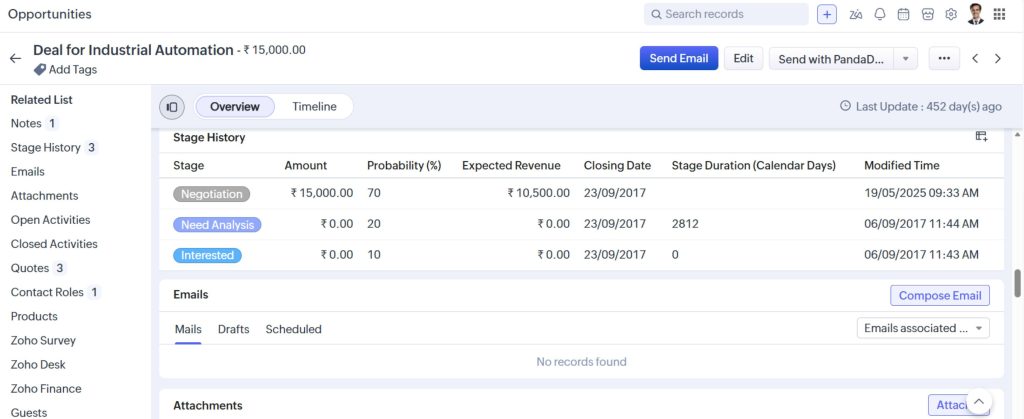
A 360° database also reduces the need to search through multiple systems. Instead, teams can access relevant information from a centralized customer record. This saves time and reduces the chances of missing important details.The growing adoption of CRM technology reflects the increasing need for connected customer data and better relationship management. According to Statista Market Insights, the global CRM software market is projected to generate US$103.51 billion in revenue in 2026 and reach US$139.56 billion by 2031.
Customers expect businesses to understand their needs and history. However, their information often exists across multiple tools and departments. A unified customer database in Zoho CRM brings important customer information into one connected system. This helps teams access the right information, reduce duplicate work, and deliver more relevant customer experiences.
The first step is to organize customer information within the right CRM modules. Zoho CRM provides standard modules such as Leads, Contacts, Accounts, and Deals. Businesses can also create custom modules based on their processes.
Every important customer detail should connect to the relevant record. This creates a structured source of information for better customer management in Zoho CRM.
Customers interact with businesses through email, phone calls, websites, social media, and messaging platforms. Connecting these touchpoints helps teams build a more complete customer history. This gives employees useful context before every interaction.
A connected customer history also reduces repeated questions and communication gaps. Teams can understand the customer’s journey without searching across multiple systems.
Every business has different processes and customer requirements. Therefore, a standard CRM setup may not capture all the information teams need. Zoho CRM customization allows businesses to create fields, modules, layouts, workflows, and related lists based on their processes. Businesses can also use custom functions and Deluge scripting for more advanced requirements.
The goal is to make Zoho CRM reflect the way your business operates.
Manual data entry can result in missed updates and delayed follow-ups. Automation helps businesses maintain accurate records while reducing repetitive work. Zoho CRM can automate processes such as lead assignment, follow-up tasks, notifications, and record updates.
For example, a website inquiry can automatically create a lead and assign it to the appropriate salesperson. The CRM can then create a follow-up task and update the record as the prospect moves through the sales process.
Effective automation keeps customer information current with less manual effort. It also makes customer management in Zoho CRM more consistent and scalable.
A complete customer database in Zoho CRM should bring together data from sales, marketing, and service. Each team sees a different part of the customer journey. Connecting these insights creates a more complete picture.
Sales data can show opportunities, purchases, and revenue history. Marketing data can reveal campaign engagement and customer interests. Service data can highlight support requests, complaints, and previous resolutions. When teams work with connected information, they can make better decisions and deliver more relevant experiences.
For example, a customer may repeatedly engage with a product campaign. This could indicate interest in an upgrade. However, recent support issues may need attention before the sales team makes an offer. A connected CRM helps teams see both signals together.
This connected approach helps businesses move from isolated customer interactions to more consistent relationship management.
Collecting customer data is only the beginning. Businesses also need to analyze that information and turn it into actionable insights. Zoho CRM reports and dashboards help teams monitor trends, performance, and customer activity. Businesses can track metrics that support sales decisions and customer relationship strategies.
For example, teams can identify:
These insights help teams move beyond simply viewing customer records. They can understand what is happening and decide what action to take next.
With the right analytics strategy, customer management in Zoho CRM becomes more proactive. Businesses can use customer data to identify opportunities, improve engagement, and make more informed decisions.
A 360° customer database should make customer information easier to understand and act on. The goal is not to create complex CRM records. Instead, teams should get the right information when they need it.
A customer-centric CRM can help teams:
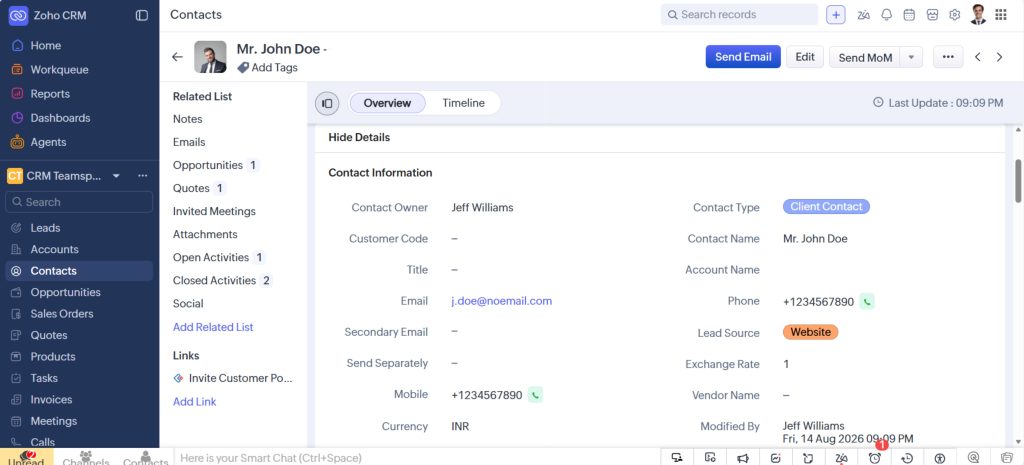
The right setup will depend on your business processes. Therefore, CRM customization should focus on usability, relevance, automation, and scalability. When Zoho CRM reflects the actual customer journey, employees can work more efficiently. Customers also receive more consistent and personalized experiences.
A 360° customer database can turn Zoho CRM into more than a system for storing customer information. By connecting customer data, communications, sales activities, marketing interactions, and service history, businesses can build a clearer picture of every relationship.
The key is to connect the right information around the customer journey. This requires a combination of well-structured data, relevant integrations, thoughtful customization, and automation. With the right approach, customer management in Zoho CRM can become more connected, proactive, and business-focused.
At GoldenLion Consulting, we help businesses customize Zoho CRM around their unique processes and customer journeys. From custom modules and workflows to integrations and advanced automation, we help create CRM solutions that support real business needs. Ready to build a more connected customer experience? Get in touch with our Zoho experts to discover how we can tailor Zoho CRM to your business.